The Slow Frame
Balance
Balance
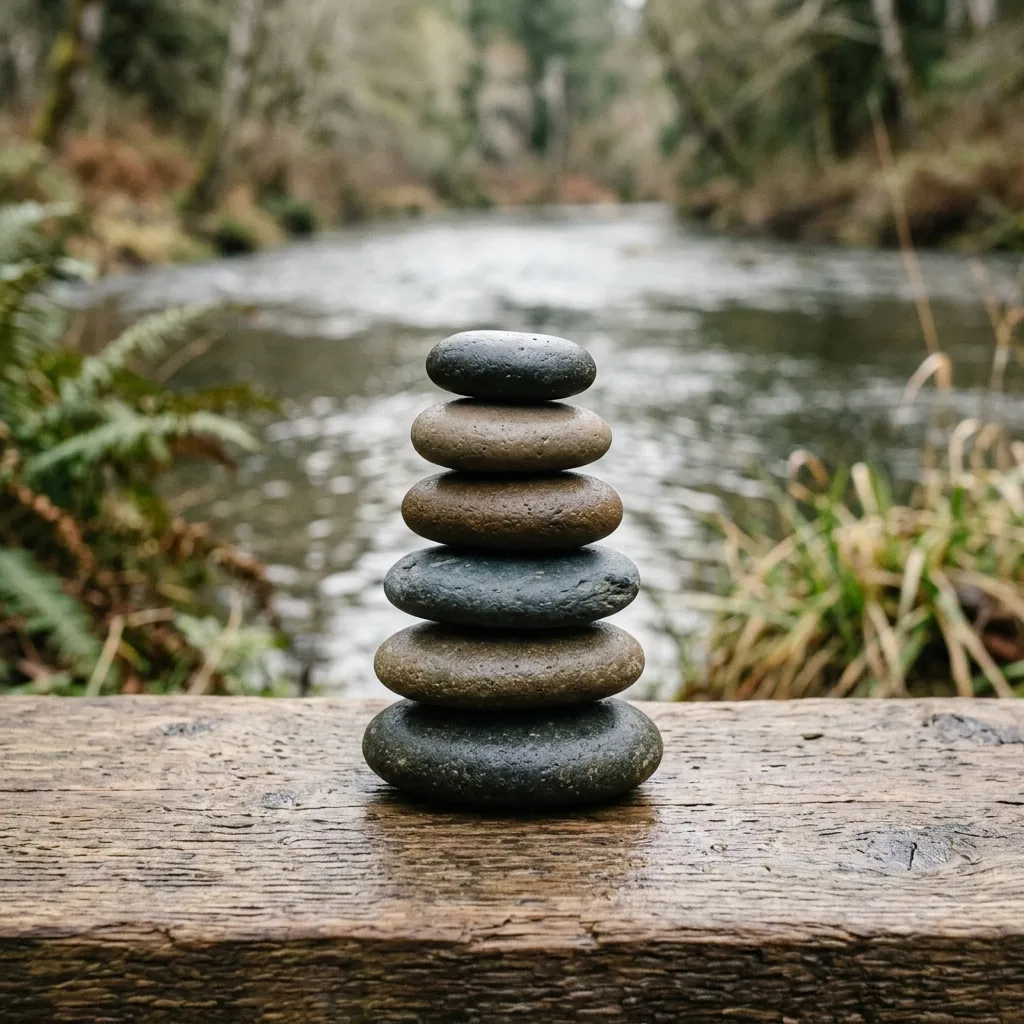
Imagine a moment suspended in time where the rush of thoughts yields to the gentle cadence of a heart at peace. Picture yourself standing at the threshold of a forest, where the whispering leaves create a symphony with the soft murmur of a stream. Here, amidst the tangled branches and scattered stones, lies an unspoken harmony that beckons you to pause and breathe.
This week, as we embark on the Slow Frame journey, we invite you to explore the serene art of seeking balance in the midst of chaos. Not unlike the forest, life presents us with a myriad of overlapping elements—each distinct, yet collectively harmonious. The task of uncovering symmetry within this chaos is akin to finding serenity in a storm, a pursuit that calls for mindfulness and intention.
In this week’s photographic assignment, we are equipped with the tools of medium zoom and a grid-locked perspective. These constraints are not limitations but rather guides that allow us to focus on the delicate equilibrium that exists around us. The square aspect ratio challenges us to compose our shots with precision, inviting us to bring harmony to both left and right, while the absence of flash and unchanged exposure let the natural interplay of light and shadow unfold authentically.
By placing your subject at the center of this frame, you may find that balance is not merely the absence of chaos but a deeper understanding of its inherent order. As you embark on this meditative exploration, let the lens become an extension of your own quest for tranquility—a reminder that even in the most tumultuous of environments, beauty can be found in the symmetry that we often overlook.
The Neuroscience of Balance
As we delve deeper into this week’s theme of balance, let’s explore how our brains navigate the intricate dance between chaos and symmetry—a dance echoed in our mindfulness practices and photographic pursuits.
Emerging research in neuropsychology reveals that mindfulness, whether practiced through traditional audio-guided sessions or innovative Virtual Reality (VR) techniques, has a profound impact on our physiological and cognitive states. A study comparing these methods found that while both modalities offer meaningful benefits, traditional mindfulness practices lead to more substantial reductions in stress markers such as breathing rate and heart rate variability, as well as enhanced mindfulness and attention skills (Hegde & Kumar, 2026). This suggests that the immersive nature of mindfulness, when stripped of technological embellishments, more effectively tunes our internal rhythms to a state of calm and focus.
The preservation of attention resources, illuminated by the unchanged P300 amplitudes in participants post-meditation, underscores a key neural mechanism by which mindfulness refines our sensory processing. In simple terms, mindfulness practice helps us maintain a heightened state of awareness, enabling us to discern subtle patterns and symmetries that might otherwise be overlooked (Bokk & Forster, 2022). This sustained attention is akin to a photographer’s eye, which, through mindful observation, perceives the hidden order within the apparent disorder of a scene.
Further extending this understanding to younger minds, mindfulness-based programs have been shown to enhance self-regulation skills in preschoolers, particularly in areas of attention and working memory (Yurdakul, 2025). Although these young learners may not yet wield a camera, their developing cognitive abilities mirror the photographer’s journey—a journey of seeing with intention and capturing the symmetry that dances in their field of view.
In the realm of photography, these insights translate into a profound practice. As you stand before the chaotic tableau of life, your camera becomes a tool for mindfulness—a way to channel the focused attention and perceptual clarity cultivated through meditation. The act of aligning your subject within the grid, balancing light and shadow, and seeking symmetry in the frame mirrors the mindfulness techniques that refine our cognitive processes. Each photograph becomes a meditation, a visual reflection of your inner equilibrium.
Thus, the quest for balance in photography is not merely a technical exercise but an embodiment of a deeper psychological truth. It is an invitation to engage with the world, not just with your eyes, but with the full awareness of your mind and the quietude of your breath. As you capture the harmony amidst chaos, you also nurture a state of mental balance—one that resonates with the natural symmetry of life itself.
The Practice of Balance
With a foundation rooted in neuroscience, our exploration of symmetry within chaos transforms from a mere photographic exercise to a profound meditative practice. As you engage with this week’s assignment, consider the act of seeking balance not only in the frame but also within yourself. The deliberate choice to capture one image per week, and to wait 24 hours before viewing it, mirrors mindfulness principles of patience and reflection.
The task of finding symmetry amidst disorder invites you to embrace the concept of balance both visually and philosophically. A tool like the UBeesize Universal Smartphone Tripod becomes invaluable in this journey. Its stability and flexibility allow you to align your camera perfectly, enabling you to focus on the composition without the distraction of physical instability. The wireless remote further aids in maintaining your centeredness, letting you adjust your frame with ease and precision. This tripod doesn’t just support your camera; it supports your practice of intentionality and stillness.
The Philosophy of Symmetry
In seeking symmetry, you are encouraged to look beyond the surface chaos to find the underlying order. This is a reflection of the philosophical idea that the world, despite its apparent randomness, is governed by principles of balance and harmony. The practice of photography, in this context, becomes a metaphor for life. Just as you center the subject in your frame, you learn to center yourself amidst life’s complexities.
This philosophy is seamlessly integrated into the Slow Frame app’s design. By limiting yourself to one photograph per week, you cultivate a deeper appreciation for each moment captured. The 24-hour development period serves as a reminder to step back, allowing insights to emerge in the quiet pause between action and reflection.
Conclusion
As you continue this week’s journey, let the art of seeking symmetry in chaos become a meditation on mindfulness and balance. Use the tools at your disposal—both technological and cognitive—to deepen your engagement with the world around you. Allow the constraints of the app to guide you towards a more thoughtful and deliberate approach to photography.
We invite you to embrace the Slow Frame experience as a path to greater awareness and tranquility. Capture the hidden harmony within your environment, and in doing so, discover the inner symmetry that mirrors the beauty you find through your lens.