The Slow Frame
Exploring the Concept of Distance Through Photography
Distance
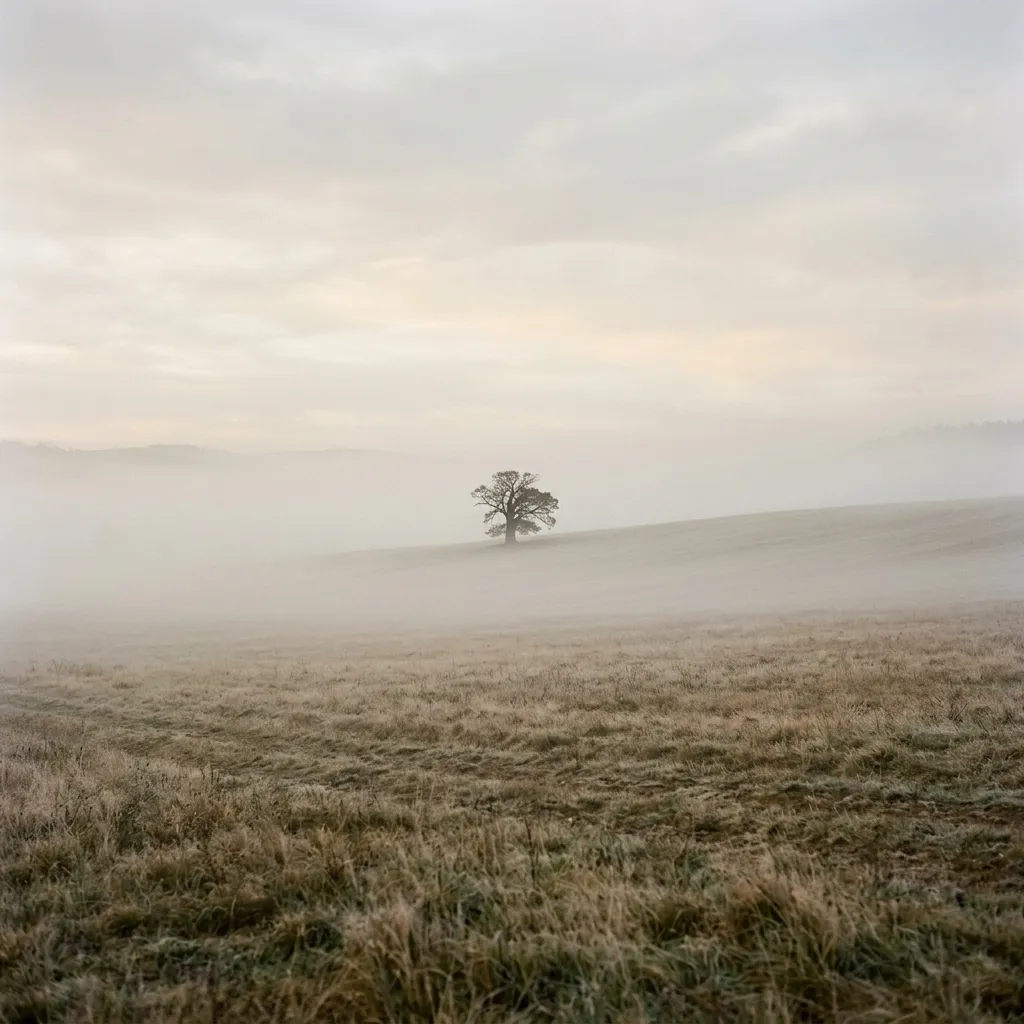
The horizon sprawls before you, a line of infinite possibilities where the sky kisses the earth. This week, as you stand on the brink of that vast expanse, an invitation gently unfurls—a chance to see beyond the immediate and touch the intangible edges of your world. It’s where the known meets the unknown, a place of silent promises and whispered dreams.
In this unique assignment, we beckon you to explore the notion of ‘Distance’. To truly engage with this theme, your camera becomes both a tool and a companion, designed with constraints that encourage a deeper connection with the landscape. The cool minimal filter cleanses your perspective, stripping away distractions and allowing the purity of the scene to emerge. The absence of a grid liberates your vision, granting you the freedom to frame the horizon in an unconstrained embrace, while a fixed zoom anchors you in the present moment.
Every week, ‘The Slow Frame’ invites you to pause, to decelerate the tempo of life, and to find serenity in the deliberate act of seeing. This week, we challenge you to look further than you’ve ever looked before. No longer is the horizon a boundary; it becomes a doorway to contemplation and introspection. As you stand in the presence of distance, let your mind wander to the farthest reaches of your imagination. Here, amidst the quietude, you can rediscover the art of patience, allowing each captured image to mature and reveal its true essence over time.
This journey is not about the destination but the richness of the journey itself. Let the horizon guide you into realms of reflection and discovery, where each step towards the distance brings you closer to an inner stillness.
The Neuroscience and Psychology of ‘Distance’
As you peer into the vastness of the horizon, the concept of distance reveals itself not just as a physical expanse but as a profound psychological journey. This exploration of distance taps into the intricate workings of our mind, inviting us to engage with the world in a manner that enhances both our interpersonal connections and intrapersonal insights.
Recent studies in neuroscience and psychology provide a compelling framework for understanding how engaging with distance can foster mindfulness and cognitive development. The study by Anand et al. (2026) presents the role of dispositional mindfulness (DM) in long-distance relationships, highlighting how the ability to nonjudgingly observe and describe experiences contributes to healthier interpersonal interactions. This nonjudging facet allows individuals to hold space for ambiguity and uncertainty, much like the view of a distant horizon that seems to shift and change with each passing moment. By cultivating an attitude of open curiosity, one can bridge the emotional distance between oneself and others, enhancing relationship satisfaction and trust.
Parallelly, the work of Jang and Lim (2026) elucidates how visual attention develops through structured observation tasks. Their findings reveal that the ability to sustain visual attention and filter distractions is not innate but evolves with intentional practice. As primary school students mature, they learn to fixate their gaze more effectively, mirroring the photographer’s task of isolating a distant focal point amidst a chaotic scene. This developmental trajectory underscores the importance of nurturing focused observation skills, which are crucial for perceiving subtleties and nuances in one’s environment.
Together, these studies suggest that engaging with distance—whether in relationships or visual exploration—requires a mindful attentiveness that is both deliberate and practiced. For the photographer, this means allowing oneself to be fully present in the moment, embracing the constraints of the camera to heighten one’s sensory awareness. By focusing on the horizon, the photographer transcends the immediate and mundane, cultivating a deeper connection with the world.
Imagine standing on a cliff’s edge, camera in hand, as you attempt to capture the meeting of sea and sky. The cool minimal filter of your camera reduces the scene to its elemental hues, allowing you to appreciate the interplay of light and shadow. As you gaze through the lens, the fixed zoom forces you to refine your focus, prompting you to observe with patience and intention. In this moment, you are not merely a passive observer but an active participant in the unfolding story of the landscape. The act of waiting 24 hours for the image to develop further enhances this mindfulness, offering a space for reflection and anticipation.
In essence, the exploration of distance becomes an exercise in mindfulness, where the horizon is not just a line in the distance but a metaphor for the breadth of human experience. This journey encourages us to let go of preconceived notions, to see with fresh eyes, and to discover the beauty that lies in the space between.
Embracing the Practice and Philosophy
As we delve deeper into the practice of looking far and wide, the philosophy underpinning this week’s assignment emerges with clarity. The act of photographing the horizon, waiting for the image to develop, and reflecting upon it allows us to cultivate a sense of presence and patience. This is where the art of mindful observation dovetails with the science of attention and emotional connection.
In the context of our assignment, ‘Look as far as you can’, we are invited to engage with the horizon not just as a physical boundary but as a symbol of our potential to see beyond the immediate. This exercise is about more than just capturing a distant view; it is about nurturing our ability to observe without judgment, much like the nonjudging facet highlighted in Anand et al. (2026). By focusing on the horizon, we develop a deeper understanding of our inner landscape, where thoughts and emotions can be acknowledged without the need for immediate reaction.
To enrich this reflective practice, consider incorporating a tactile element into your routine. The Premium Linen Mindful Journaling Notebook offers a beautiful space for your weekly reflections. As you document your thoughts and observations, the act of writing by hand in a carefully crafted notebook can deepen your connection to the experience, providing a quiet sanctuary for contemplation.
The 24-hour wait for your photograph to develop is not simply a delay; it is an opportunity to practice mindfulness in patience. This pause allows for a period of introspection where you can meditate on the image yet to unfold. Much like the developmental journey of visual attention outlined by Jang and Lim (2026), this practice encourages you to hone your focus, filtering out distractions to engage fully with the moment.
As you embark on this week’s journey with ‘The Slow Frame’, remember that each photograph is more than a captured image—it is a moment of self-discovery. By embracing the constraints and the wait, you allow yourself to explore not just the landscape before you but the terrain within.
We invite you to download ‘The Slow Frame’ app and join us in this 52-week odyssey of delayed gratification and thoughtful reflection. Let each step towards the horizon bring you closer to an inner stillness, and may each photograph open up new vistas of understanding and appreciation.
References
- Anand, L., Khoury, B., & Du Bois, S. (2026). Mindfulness Matters: Examining the Role of Dispositional Mindfulness in Interpersonal and Intrapersonal Functioning in Long-Distance Relationships. The Family Journal.
- Jang, S., & Lim, S. (2026). VISUAL ATTENTION IN EARLY PRIMARY SCHOOL STUDENTS DURING OBSERVATION ACTIVITIES. Journal of Baltic Science Education.